
Who or What Is UL?
UL stands for Underwriters Laboratories Inc.® and is one of the world's leading organizations for testing and certification in the field of product safety. It tests and certifies a wide variety of materials, components and end products for operational safety, especially with regard to possible personal injury and the occurrence of fires.
UL Certification Marks
UL maintains a directory with more than 3 million products that are publicly available via online databases.
UL offers various certifications:
| Mark | Definition | |
|---|---|---|
 |
UL Listing Mark:
Proof that UL has tested representative samples of the product in question and confirmed its compliance with applicable UL safety requirements. |
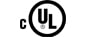
Ready-to-connect devices certified according to US and Canadian regulations, e.g. limit switch with cable and plug |
 |
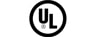
Ready-to-connect devices certified according to Canadian regulations, e.g. limit switch with cable and plug | |
 |
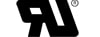
Ready-to-connect devices certified according to US regulations, e.g. limit switch with cable and plug | |
 |
UL Recognized Component Mark:
Identifies UL-recognized component parts that can be used in a product or system bearing the UL Listing Mark. |
Devices intended for installation, certified according to US regulations |
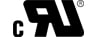 |
Devices intended for installation, certified according to Canadian regulations | |
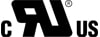 |
Devices intended for installation, certified according to US and Canadian regulations | |
Why Is UL Certification So Important? Why Do I Need a UL Certification Mark?
In the course of worldwide globalization, the rapid, problem-free introduction of new products on the world market is becoming increasingly important. Product liability laws in the USA are much stricter than in Europe. If products are to be exported to North America, they should be UL certified, especially if they are electrical devices. The certification process according to North American standards for electrical products greatly simplifies market access.
Conformity with US safety rules is demonstrated by a certification mark from a qualified recognized test laboratory. The most recognized test laboratory is UL (Underwriters Laboratories), which means the testing laboratories of insurance companies. Ultimately, it is about minimizing liability risks for insurance companies caused by equipment and the associated hazards (electric shock, fire and mechanical injury).
For certification of their product by UL, manufacturers must demonstrate that they comply with the specified safety requirements, which are largely developed by UL itself. In addition, the manufacturer must ensure, using an appropriate system, that every copy of their product permanently meets the specified safety requirements. To ensure this, UL inspects production facilities unannounced at irregular intervals. If a manufacturer modifies their product design, UL must have tested the new version before the product may bear a UL certification mark.
Is UL Required by Law?
There is no law that mandates UL certification.
However, in the USA, all electrically controlled devices or systems must basically be approved according to the provisions of the Occupational Safety and Health Act (OSHA Article 29 CFR 1910.xxx) and the regulations of the National Electric Code (NEC), in Canada the provisions of the Occupational Health and Safety Act (OHSA) and the regulations of the Canadian Electric Code (CEC).
As a result of the federal systems of the USA and Canada, different versions of the NEC or CEC with individual supplements must be met in the individual states and provinces. This is related, among other things, to the climatic conditions in the individual states.
Do Connection Cables Need to Be UL Certified?
If an "NEC Class 2 Circuit", an energy-limited circuit with a max. voltage of 30 V AC or 42 V DC, max. current of 5 A and a maximum power of 100 VA, is present, then according to the UL definition there is neither a danger of electric shock nor a danger of fire. Thus, no UL evaluation for plugs and cables needs to take place. For devices not rated for "NEC Class 2 Circuit", approval for the cables is required.
How Does UL Differ from CE Marking?
The European counterpart to the UL certification mark is CE marking. This symbol indicates that a product complies with applicable European directives regarding safety and the protection of health, environment and consumers.
However, the difference is that manufacturers usually simply declare compliance with CE requirements themselves, whereas the award of the UL certification mark is preceded by independent certification by UL. A product with the CE symbol can thus also have a quality seal such as the UL certification mark.
The UL mark basically has no more legal weight than other trademarks. In this respect it differs from CE marking or the Federal Communications Commission Part 15 standard, both of which are legally required.
How Does UL Differ from IEC?
IEC stands for International Electrotechnical Commission and is an international standardization organization for standards in the field of electrical engineering and electronics based in Geneva.
UL and IEC differ significantly from each other. IEC standards only define the minimum safety requirements of a device or system, whereas the technical details of the constructive implementation of the safety requirements are left to the manufacturer. UL guidelines, on the other hand, are much more detailed with regard to product safety and its application. In addition to standard development, UL is also responsible for approbation or general third-party certification as well as on-site acceptance. For example, there are factory inspections at device manufacturers that are intended to ensure that the framework conditions defined with certification are maintained. Product modifications must be approved by UL before production begins.
For IEC applications, it is sufficient if the device characteristics (use category) match the load. In UL, however, it is additionally important in which application the devices are used. Different applications are subject to different guidelines.